Slow retrieval
Finding a paper file can take hours or days.
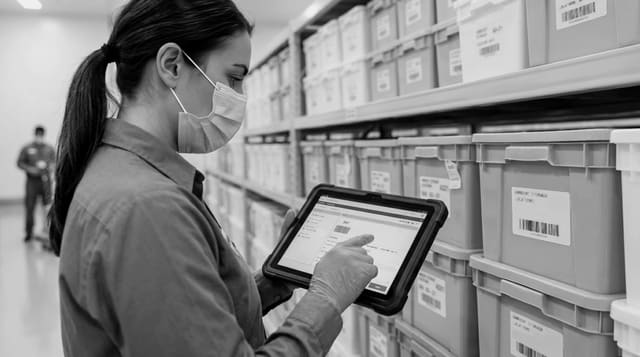
Turn a physical archive into information that can be found and governed.
Overview
Paper patient files take up space, slow down care and are difficult to protect. Secure digitisation turns large paper archives into indexed, searchable digital records with controlled access and a full audit trail.
Hospitals and clinics often hold hundreds of thousands of paper files in archive rooms and off-site storage. Retrieving a file can take hours or days. Files are misplaced, damaged or incomplete, and every request depends on someone physically finding the folder. Protecting paper records under POPIA is difficult, because access is not logged. A structured digitisation project scans, indexes and quality-checks files, then stores them in a secure records system where authorised staff can find them in seconds.
A provincial hospital needs to clear an archive of 600,000 patient files to free space for a new ward. Files are collected in batches, logged and scanned on site. Each file is indexed by patient number, name and date and checked for quality. Within the records system, clinicians search by patient number and open the full file in seconds, with every access logged. Paper originals are retained or destroyed according to the retention policy, and the archive room is converted on schedule.
The challenge
Finding a paper file can take hours or days.
Folders are misplaced, damaged or missing pages.
Archive rooms and off-site storage cost money and space.
Paper records cannot show who viewed them, making POPIA compliance hard.
Operational flow
01
Agree scope, indexing fields, retention rules and security controls.
02
Track every batch of files from the archive to the scanner.
03
Scan files at high quality and index them by patient and date.
04
Verify images and index data before records are released.
05
Load records into a secure system with role-based access and audit trails.
What operations can see
Operational impact
Who it's for
Retrieve patient files in seconds and free up archive space.
Digitise records across many facilities consistently.
Secure and organise large volumes of patient documentation.
Control access and retention under POPIA.
Insight
Digitising patient archives speeds up care, saves space and strengthens compliance. Files are available instantly to authorised staff, every access is logged and retention is managed by policy. The organisation moves from protecting paper to managing information.
This use case is particularly relevant to Healthcare environments, but the underlying operating model can also apply wherever distributed frontline teams, vehicles, assets or facilities need stronger visibility and accountability.
FAQ
It depends on volume, file condition and indexing needs. Large archives are usually scanned in batches over weeks or months, with priority files done first.
They can be, with secure storage, role-based access, audit trails and clear retention policies. These controls are part of the project.
Yes. Records are indexed by fields such as patient number, name and date, and text recognition can make content searchable.
Originals are retained, returned or securely destroyed according to your retention policy and legal requirements.

Tell us how your operation runs today and we'll show you what this looks like for your teams.