Paper checks without consequence
Failed items are recorded but nothing stops the vehicle.
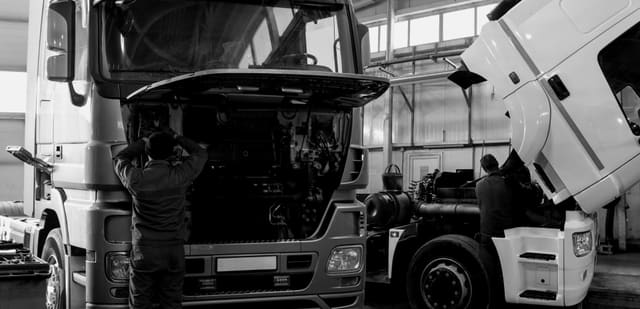
Stop a critical defect from becoming tomorrow's incident.
Overview
A pre-trip inspection only protects people if a failed check actually stops the vehicle. A digital vehicle inspection app flags critical defects immediately, notifies maintenance and keeps the vehicle out of service until the repair is verified.
Paper pre-trip checks are often completed quickly and filed without review. A driver may note worn brakes or a faulty light, but the sheet stays in the cab and the vehicle goes out anyway. Maintenance finds out days later, or after an incident. With a digital inspection app, each item has a defined severity. Critical failures trigger an alert, create a work order and change the vehicle's status, so dispatchers and supervisors can see it is not available.
At 05:45, a bus driver completes the pre-trip inspection on a tablet and marks the rear brake lights as not working, with a photo. Because brake lights are a critical item, the app sets the bus to out of service and alerts the depot workshop. The dispatcher sees the status change and allocates a spare bus to the route. The technician replaces the bulb and fuse, records the repair and a supervisor verifies it. The bus returns to service at 06:30 with a complete record.
The challenge
Failed items are recorded but nothing stops the vehicle.
Maintenance learns about problems days later.
Drivers decide for themselves whether a fault matters.
Vehicles return to service without verification.
Operational flow
01
Drivers complete a guided pre-trip checklist on a mobile device.
02
Each item has a severity, from advisory to critical.
03
Critical failures set the vehicle to out of service and notify maintenance.
04
A work order is created and the technician records the fix.
05
A supervisor confirms the repair before the vehicle returns to service.
What operations can see
Operational impact
Who it's for
Keep vehicles with safety defects off the road.
Meet roadworthiness obligations on every trip.
Stop defective equipment before it enters the work area.
Prove that defects are acted on and repairs are verified.
Insight
A digital pre-trip inspection with enforced rules turns a checklist into a safety control. Unsafe vehicles stay in the depot, maintenance responds faster and every return to service is verified. Compliance is easier to demonstrate and incidents linked to known defects fall.
This use case is particularly relevant to Fleet environments, but the underlying operating model can also apply wherever distributed frontline teams, vehicles, assets or facilities need stronger visibility and accountability.
FAQ
It is a mobile app that guides drivers through a pre-trip or post-trip vehicle inspection, captures photos and reports defects to maintenance immediately.
Yes. Critical defects can automatically set a vehicle to out of service until a repair is verified.
Usually not. Guided checklists are often faster and more complete than paper forms.
Yes. Defects can create work orders in the platform or in your existing maintenance system.

Tell us how your operation runs today and we'll show you what this looks like for your teams.