Harsh conditions
Dust, water, vibration and heat cause frequent failures in consumer devices.
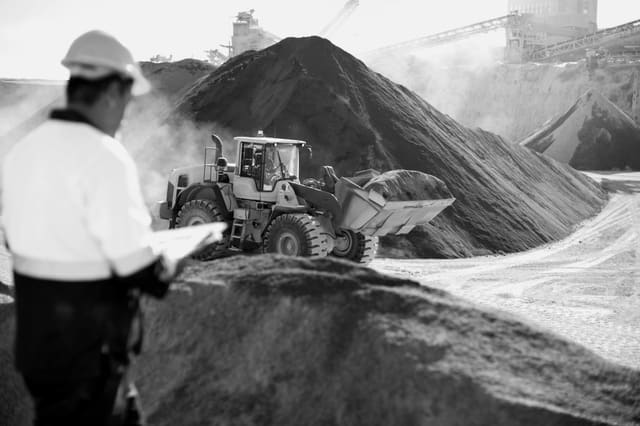
Put mobile technology where the work actually happens.
Overview
Mining is hard on technology. Dust, water, heat, vibration and drops destroy ordinary phones quickly. Rugged mobile phones and tablets, managed from one platform, give mine workers reliable tools for communication, inspections and safety in the conditions they actually work in.
Mines increasingly depend on mobile technology for pre-use inspections, SHEQ reporting, permit-to-work, push-to-talk and lone-worker safety. When workers use consumer devices, breakages and downtime pile up, and every replacement needs to be set up again by hand. When devices are unmanaged, nobody knows which apps are installed, whether they are up to date, or where a lost device has gone. A standard fleet of ruggedised devices, enrolled in mobile device management, keeps the right tools in every worker's hand and gives IT control of the whole fleet from one place.
A shift supervisor at an open-pit mine issues rugged phones to a new team of contractors. Each device has been enrolled centrally and already carries the pre-use inspection app, the safety observation form, push-to-talk and the emergency alert. Operators complete equipment inspections at the start of the shift, report a hazard with a photo during the morning and stay in contact with the control room over push-to-talk across the pit. When one device is dropped from a haul truck step and damaged, a replacement is issued and configured in minutes, with no data lost.
The challenge
Dust, water, vibration and heat cause frequent failures in consumer devices.
Every broken or lost device takes time to replace and set up again.
IT cannot see which devices are active, updated or compliant across sites.
Different devices and app versions lead to different processes on every shift.
Operational flow
01
Choose rugged phones and tablets rated for the mine's surface or underground conditions.
02
Register every device centrally before it is issued to workers or contractors.
03
Push inspection, SHEQ, push-to-talk and safety apps to the whole fleet.
04
Track device health, location, battery and compliance from one console.
05
Swap damaged devices quickly, with settings and apps restored automatically.
What operations can see
Operational impact
Who it's for
Equip operators, artisans and supervisors with devices that survive the environment.
Issue and recover managed devices quickly as teams change between projects.
Make sure inspection and reporting tools are on every device, every shift.
Manage a large device fleet across sites with less manual support.
Insight
A managed fleet of rugged devices reduces downtime, standardises processes and keeps safety tools available on every shift. Workers spend less time on broken equipment, supervisors get consistent data from the field, and IT controls every device across every site from one place.
This use case is particularly relevant to Mining environments, but the underlying operating model can also apply wherever distributed frontline teams, vehicles, assets or facilities need stronger visibility and accountability.
FAQ
Look for devices with an IP68 rating, military-standard drop testing, long battery life and glove-friendly screens. For hazardous areas, intrinsically safe models are available. We help you select the right devices for each environment.
Yes, where the mine has Wi-Fi, private LTE or another network underground. Push-to-talk and data apps work over these networks, and some apps can work offline and sync later.
Mobile device management lets you enrol, configure, update, track and secure every device remotely, so large fleets can be run by a small IT team.
The device can be locked or wiped remotely, and a replacement can be enrolled and configured automatically, so the worker is back in operation quickly.

Tell us how your operation runs today and we'll show you what this looks like for your teams.