Invisible from the office
Tracking data shows location and speed, not whether the driver is alert.
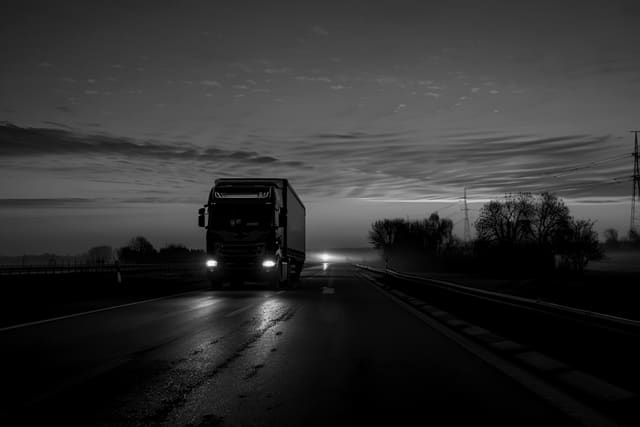
Identify fatigue while there is still time to intervene.
Overview
Fatigue is one of the hardest road risks to see from an office. AI vehicle cameras watch for the early signs of drowsiness and distraction in the cab, warn the driver immediately and alert the control room, so action is taken before a tired moment becomes a collision.
Long-haul routes, night shifts, early starts and tight delivery windows all push drivers towards fatigue. Traditional fleet tracking shows where a vehicle is and how fast it is moving, but not whether the person driving it is alert. By the time a lane departure or harsh braking event appears in a report, the risk has already happened. In-cab AI cameras analyse eye closure, yawning, head position and phone use as they occur, giving fleets a way to manage fatigue as a live safety risk rather than a statistic reviewed after an incident.
At 03:10 on a northbound national route, a truck driver begins to show prolonged eye closure. The in-cab camera detects the pattern and sounds an audible alert in the cab. When a second event follows minutes later, the system escalates to the control room with a short video clip, the vehicle's location and speed. The controller calls the driver, agrees a rest stop at the next safe location and logs the intervention. The next morning, the fleet manager reviews the night's fatigue events across the fleet and adjusts the roster for the routes with repeated alerts.
The challenge
Tracking data shows location and speed, not whether the driver is alert.
Fatigue usually only appears in reports after a lane departure, harsh event or collision.
Shift and route planning rarely reflects where and when fatigue actually occurs.
Phone use and inattention compound fatigue risk on long or repetitive routes.
Operational flow
01
The in-cab AI camera tracks eye closure, yawning, head position and phone use.
02
The driver receives an immediate audible alert when early fatigue signs appear.
03
Repeated or severe events are sent to the control room with a clip, location and speed.
04
Controllers contact the driver and agree a rest stop or change of plan, and the action is logged.
05
Fatigue trends by route, shift and driver inform rosters, coaching and policy.
What operations can see
Operational impact
Who it's for
Manage fatigue on overnight and cross-border routes where the risk is highest.
Protect operators on repetitive shift work in demanding conditions.
Keep bus and shuttle drivers alert to protect passengers and the public.
Base rosters and coaching on real fatigue data rather than assumptions.
Insight
Fatigue detection turns a hidden risk into one you can act on in the moment. Drivers get a warning while there is still time to respond, controllers can step in when warnings are ignored, and managers see where fatigue clusters. The result is fewer serious incidents and a fleet safety programme built on evidence.
This use case is particularly relevant to Fleet environments, but the underlying operating model can also apply wherever distributed frontline teams, vehicles, assets or facilities need stronger visibility and accountability.
FAQ
An in-cab camera uses computer vision to analyse signs such as prolonged eye closure, frequent yawning and head nodding. When the pattern indicates fatigue, the system alerts the driver and can escalate to the control room.
Yes. The same camera detects phone use, looking away from the road and other distraction behaviours, which often occur alongside fatigue.
The driver hears an alert immediately. Repeated or severe events are sent to the control room with video, location and speed, so a controller can contact the driver and agree a safe course of action.
Yes. Trends by route, time of day and driver show where fatigue clusters, so rosters, rest stops and coaching can be planned around real risk.

Tell us how your operation runs today and we'll show you what this looks like for your teams.