Equipment always on the move
Items are transferred between vehicles, left at hospitals or sent for repair.
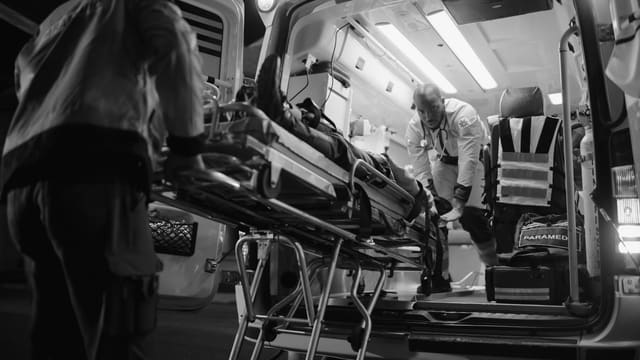
Know the right equipment is on the right vehicle, before the call comes in.
Overview
An ambulance is only ready if the right equipment is onboard. Asset tracking with BLE tags and in-vehicle gateways checks critical equipment automatically, so missing items are found before the crew responds, not at the patient's side.
Defibrillators, ECG monitors, ventilators, suction units and infusion pumps move constantly between vehicles, stations, hospitals and repair. An asset register shows what should be on each vehicle, but not what is physically there at the start of a shift. Manual checks take time and depend on crews remembering every item. Across a fleet of hundreds of ambulances, more than a thousand high-value assets are in motion. Tagging each item and fitting a gateway in each vehicle turns the equipment check into an automatic, continuous readiness status.
At shift start, the gateway in ambulance 118 detects the defibrillator, ECG monitor, suction unit and infusion pump, but not the ventilator. The vehicle appears on the readiness dashboard with one item missing. The movement history shows the ventilator was last detected at a hospital emergency department the previous evening. The station officer allocates a replacement from stores, the gateway detects it onboard, and the vehicle status changes to complete before the first call. The hospital is asked to return the original unit.
The challenge
Items are transferred between vehicles, left at hospitals or sent for repair.
A static list cannot confirm what is physically onboard right now.
Checking every item by hand takes time and is easy to rush.
Expensive medical devices go missing and are replaced unnecessarily.
Operational flow
01
Fit BLE tags to every critical item of equipment.
02
In-vehicle gateways continuously detect which tagged items are onboard.
03
The detected load-out is checked against the required list for each vehicle.
04
Missing items appear as exceptions on the readiness dashboard before deployment.
05
Movement history shows where the item went, and a replacement is verified onboard.
What operations can see
Operational impact
Who it's for
Confirm every ambulance is fully equipped before every shift.
Track rescue tools and medical kits across appliances and stations.
Manage equipment moving between vehicles and facilities.
Reduce losses and see utilisation across the whole fleet.
Insight
Automatic equipment tracking turns readiness from an assumption into a verified status. Missing items are found before a call, losses fall and managers see fleet-wide readiness at a glance. Crews spend less time on manual checks and more time ready to respond.
This use case is particularly relevant to EMS environments, but the underlying operating model can also apply wherever distributed frontline teams, vehicles, assets or facilities need stronger visibility and accountability.
FAQ
Each item carries a small BLE tag. A gateway in the vehicle detects which tags are present and compares them with the required equipment list, flagging anything missing.
Any portable item can be tagged, including defibrillators, ECG monitors, ventilators, suction units, infusion pumps, stretchers and drug kits.
Yes. Movement history shows the last place each item was detected, such as another vehicle, a station or a hospital.
Yes. Knowing where every item is, and when it left a vehicle, reduces losses and unnecessary replacement purchases.

Tell us how your operation runs today and we'll show you what this looks like for your teams.