Nobody nearby
Injuries and emergencies may go unnoticed for hours.
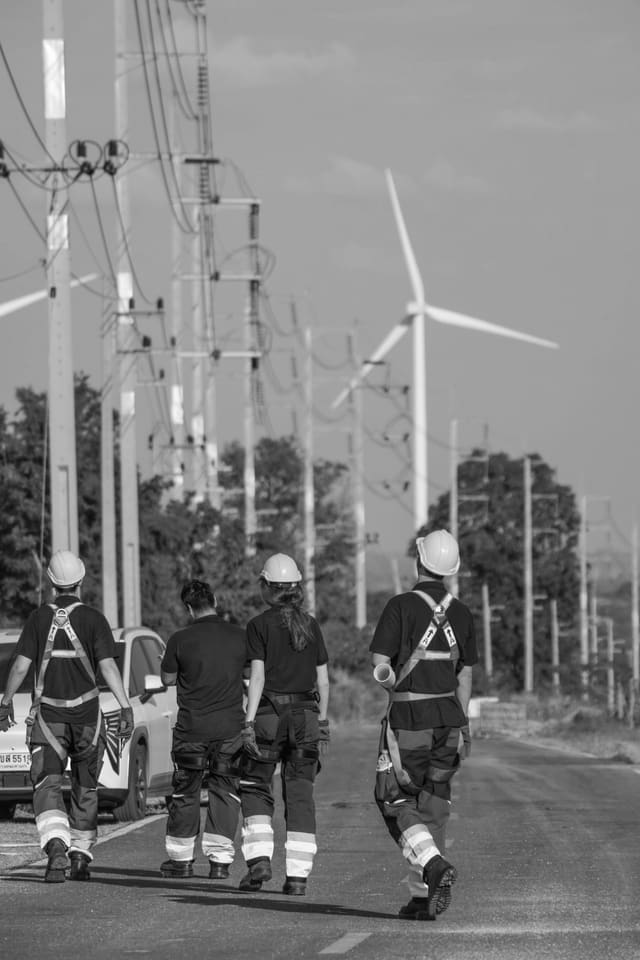
Give workers operating alone a direct connection to help.
Overview
When someone works alone in a remote area, nobody is there to raise the alarm if something goes wrong. Lone worker protection on a rugged phone checks in on them automatically, detects falls and inactivity, and sends their exact location to the control room in an emergency.
Technicians, inspectors, security officers and farm workers often work alone, far from colleagues and sometimes out of normal phone coverage. If they are injured, attacked or taken ill, it may be hours before anyone notices. Employers have a duty of care but limited ways to fulfil it. A lone worker solution combines timed check-ins, man-down and no-movement detection, a dedicated SOS button and GPS location, monitored by a control room.
A water utility technician is inspecting a reservoir valve chamber in a rural area. Her rugged phone is set to ask for a check-in every 30 minutes. While climbing out of the chamber, she slips and falls. The device detects the fall and no movement, sounds a local alarm and, when she does not respond within 60 seconds, sends an alert with her GPS location to the control room. The controller calls her on push-to-talk, gets no answer and dispatches the nearest colleague and EMS. She is reached within 25 minutes.
The challenge
Injuries and emergencies may go unnoticed for hours.
Even when an alarm is raised, nobody knows exactly where to go.
Phone check-in routines depend on people remembering to call.
Employers struggle to show they are protecting remote staff.
Operational flow
01
Issue rugged phones or lone worker devices with SOS and sensors.
02
Workers confirm they are safe at set intervals, automatically prompted.
03
Falls, no movement and missed check-ins trigger alerts.
04
The control room sees the worker's location and dispatches help.
05
Every alert and response is recorded for review and reporting.
What operations can see
Operational impact
Who it's for
Protect technicians at remote sites and substations.
Support guards working alone at night.
Look after workers in large, isolated areas.
Meet duty-of-care obligations with evidence.
Insight
Lone worker protection gives remote staff a safety net they can rely on. Emergencies are detected even when the worker cannot call, help is sent to the exact location and every response is recorded. Workers feel safer, and employers can show they take duty of care seriously.
This use case is particularly relevant to Cross-industry environments, but the underlying operating model can also apply wherever distributed frontline teams, vehicles, assets or facilities need stronger visibility and accountability.
FAQ
It is a combination of devices, apps and monitoring that checks on employees working alone and raises alerts if they need help.
Man-down detection uses the device's sensors to detect a fall or lack of movement and raises an alert if the worker does not respond.
Alerts go to a control room, supervisor or monitoring centre, which contacts the worker and dispatches help if needed.
Some devices support satellite messaging for areas without mobile coverage. We help you choose devices that suit your areas of operation.

Tell us how your operation runs today and we'll show you what this looks like for your teams.