One account against another
Complaints and claims turn into disputes between staff and members of the public, with no neutral record to settle them.
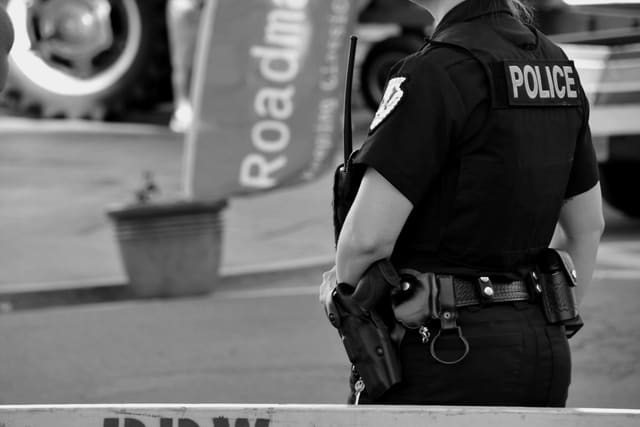
Capture objective evidence during frontline interactions.
Overview
When a frontline incident is disputed, the outcome often depends on whose account is believed. Body worn cameras replace competing recollections with an objective, time-stamped video record that supervisors, investigators and clients can review with confidence.
Security officers, traffic and municipal law enforcement officers and EMS crews regularly work situations that later become complaints, claims or investigations. Without independent evidence, organisations rely on handwritten notes and statements captured hours after the event, when detail has already faded. Footage recorded on personal phones creates a different problem: it is hard to verify, easy to lose and difficult to manage under POPIA. A managed body worn camera programme gives every officer the same hands-free device, the same recording rules and the same secure path from the field to the evidence store, so the record of what happened is consistent across every shift and every site.
A security officer responds to an altercation at a shopping centre entrance. The officer activates the body camera with one press, and the device captures the interaction in Full HD with audio, including the pre-event buffer from the seconds before activation. The officer triggers the built-in panic alert when the situation escalates, and the control room sees the officer's location immediately. After the shift, the camera docks and uploads automatically. The footage is tagged to the incident number, access is restricted to authorised reviewers, and every view and export is logged. When the client queries the incident the next morning, the supervisor shares a secure clip instead of a written summary.
The challenge
Complaints and claims turn into disputes between staff and members of the public, with no neutral record to settle them.
Notes captured at the end of a shift miss sequence, timing and detail that matter in a review or hearing.
Video on personal devices is hard to verify, easy to delete and difficult to handle lawfully.
Lone officers facing a threat need a fast way to call for support without reaching for a radio or phone.
Operational flow
01
The officer starts recording with one press, and the pre-event buffer keeps the moments before activation.
02
A panic button on the camera sends an emergency alert with location to the control room.
03
Footage offloads automatically when the camera docks, with no manual file handling.
04
Recordings are linked to incidents, retained according to policy and protected by role-based access.
05
Supervisors and investigators review footage and share secure clips, with every action logged in the audit trail.
What operations can see
Operational impact
Who it's for
Prove the service delivered on every site and resolve client and public complaints with evidence.
Capture roadside and public interactions objectively and protect officers against false allegations.
Record difficult patient and public interactions and support crew safety on scene.
Document safety incidents, access disputes and high-risk work with an independent record.
Insight
The value of body worn cameras is not the footage alone. It is a dependable evidence process: consistent capture, automatic upload, controlled access and a complete audit trail. Organisations resolve complaints faster, reduce the cost of disputed claims, and give frontline staff confidence that their conduct is on record. Combined with panic alerts and live location, the same device also becomes a safety tool for officers working alone.
This use case is particularly relevant to Cross-industry environments, but the underlying operating model can also apply wherever distributed frontline teams, vehicles, assets or facilities need stronger visibility and accountability.
FAQ
A body worn camera records video and audio from the officer's point of view during frontline interactions. It creates an objective record for incident review, complaints, claims and investigations, and on most professional models includes a panic alert for officer safety.
Footage uploads automatically to a secure evidence store when the camera docks. Access is role-based, recordings are retained according to your policy, and every view, share and export is recorded in an audit trail.
Body worn cameras can be deployed in line with POPIA when there is a clear recording policy, notice to the public where required, restricted access and defined retention periods. We help you set these up as part of the rollout.
Yes. The built-in panic alert sends an emergency notification with the officer's location to the control room, so help can be dispatched while the camera keeps recording.

Tell us how your operation runs today and we'll show you what this looks like for your teams.