Coverage gaps
Radio dead spots exist in deep pits, behind spoil heaps and at remote sites.
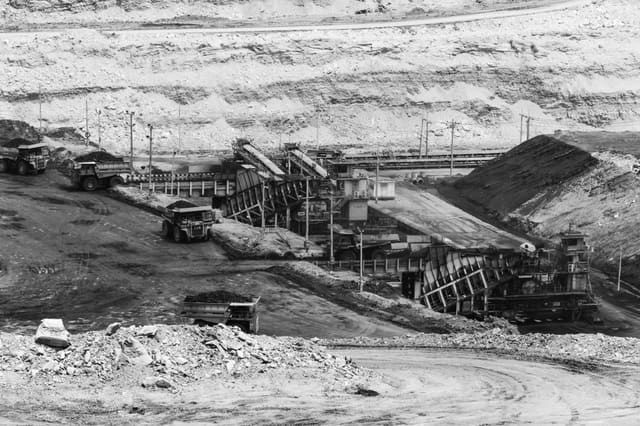
Connect teams across a wide and changing mining operation.
Overview
Mines cover large areas, and teams move between pits, plants, workshops and remote infrastructure. Push-to-talk over the mine's networks keeps everyone connected with one-button group calls, emergency alerts and location, wherever they work.
Many mines use analogue or digital radio networks that leave dead spots in deep pits, behind spoil heaps and at remote pumping stations. Contractors often use different radios on different channels, so coordination between teams is difficult. In an emergency, it is hard to reach everyone at once or know where people are. Push-to-talk on rugged phones can use private LTE, Wi-Fi and public cellular networks, and can bridge to existing radios, so every team is on one system without replacing what already works.
During a blast preparation at an open-pit mine, the blasting supervisor uses push-to-talk to broadcast the clearance warning to every talk group in the pit at once: drill crews, haul truck operators, contractors and security. Supervisors confirm clearance from their sections over PTT, and the control room sees on the map that no devices remain inside the exclusion zone. After the blast, the all-clear is broadcast the same way. Later that day, an operator at a remote pump station triggers an emergency alert, and the control room locates him immediately.
The challenge
Radio dead spots exist in deep pits, behind spoil heaps and at remote sites.
Contractors and departments use different radios and channels.
Reaching every team at once for blasts or evacuations is difficult.
Controllers cannot see where people are when they call.
Operational flow
01
Map private LTE, Wi-Fi, cellular and radio coverage across the mine.
02
Issue rugged phones with push-to-talk to employees and contractors.
03
Create talk groups by section, role and contractor, plus mine-wide broadcast.
04
Connect existing radio channels so both systems can talk.
05
Use emergency alerts, broadcast and location for blasts and incidents.
What operations can see
Operational impact
Who it's for
Connect drill, haul, plant and contractor teams across the pit.
Use underground networks for PTT, alerts and location.
Join the mine's communication system without separate radios.
Broadcast, locate and record across the whole operation.
Insight
Push-to-talk gives the mine one communication system that reaches every team. Blasts and evacuations are coordinated faster, contractors are included, and every emergency call carries a location. Existing radios keep working, so the change can be phased in.
This use case is particularly relevant to Mining environments, but the underlying operating model can also apply wherever distributed frontline teams, vehicles, assets or facilities need stronger visibility and accountability.
FAQ
Yes. Push-to-talk over cellular works on private LTE, Wi-Fi and public mobile networks, and can roam between them.
Yes. Gateways connect radio channels to push-to-talk talk groups, so radio and phone users can talk to each other.
Yes. Broadcast groups let supervisors or the control room reach every user at once, which is useful for blasts and evacuations.
Yes. Rugged phones with dedicated PTT buttons, loud speakers and glove-friendly controls are designed for these conditions.

Tell us how your operation runs today and we'll show you what this looks like for your teams.