Limited range
Radio coverage ends at the edge of the repeater network.
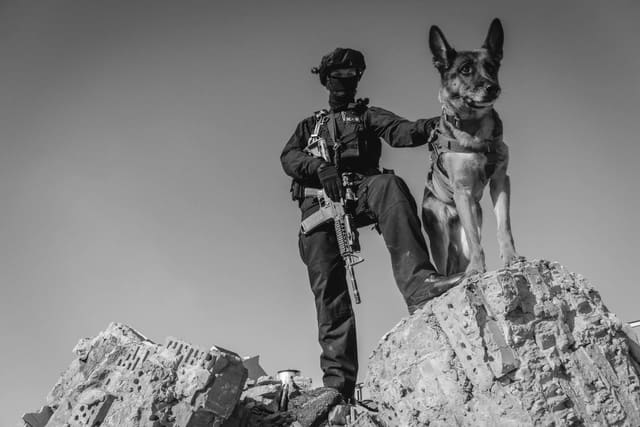
Give guards and control rooms one communication layer across sites.
Overview
Two-way radios work well until teams spread beyond the range of a repeater. Push-to-talk over cellular gives security teams the same instant, one-button communication across a city, a province or the whole country, with encryption and location built in.
Security companies run guards, supervisors and armed response vehicles across many client sites. Traditional radio networks are limited by line of sight and repeater coverage, and adding sites or regions means more infrastructure and licences. Teams fall back on phone calls and WhatsApp groups, which are slow, unrecorded and hard to control. Mission-critical push-to-talk on rugged phones uses cellular and Wi-Fi networks, so a supervisor can reach a guard on any site instantly, and the control room can see who is talking and where they are.
A security company covers 60 sites across Gauteng. A guard at an industrial park reports suspicious activity on the perimeter. One press of the PTT button reaches the area's talk group, including the supervisor 20km away and the nearest response vehicle. The control room sees the guard's location on the map and creates a temporary talk group with the guard, the response unit and the client's site manager. The response unit arrives in eight minutes. The full call history is recorded for the incident report.
The challenge
Radio coverage ends at the edge of the repeater network.
Adding sites or regions means new infrastructure and licences.
Phone calls and chat groups are slow, unrecorded and uncontrolled.
Controllers do not know exactly where the caller is.
Operational flow
01
Issue rugged phones or PTT handsets with the push-to-talk app.
02
Set up talk groups by site, area and role.
03
Guards and supervisors reach their group instantly with one button.
04
The control room sees who is talking, where they are, and creates incident groups.
05
Calls and messages are logged for incident review and compliance.
What operations can see
Operational impact
Who it's for
Connect guards and supervisors across all client sites.
Coordinate response vehicles with guards and the control room.
Give large properties reliable coverage without new infrastructure.
See and manage all communication in one place.
Insight
Push-to-talk over cellular removes the range limits of radio without losing its speed. Teams communicate instantly wherever they are, controllers see locations in every call, and conversations are recorded. Expanding to new sites becomes a matter of adding users, not building towers.
This use case is particularly relevant to Security environments, but the underlying operating model can also apply wherever distributed frontline teams, vehicles, assets or facilities need stronger visibility and accountability.
FAQ
Push-to-talk over cellular, or PoC, gives the instant, one-button group calling of a two-way radio using mobile networks and Wi-Fi, so range is not limited by repeaters.
Mission-critical push-to-talk platforms encrypt voice and data end to end, use dedicated enterprise servers and control who can join each talk group.
Yes. Push-to-talk platforms can connect to existing radio networks, so radio users and phone users can talk to each other.
Most Android and iOS smartphones, rugged phones with dedicated PTT buttons, and specialist PTT handsets and accessories.

Tell us how your operation runs today and we'll show you what this looks like for your teams.