Different radio systems
Agencies cannot talk to each other directly.
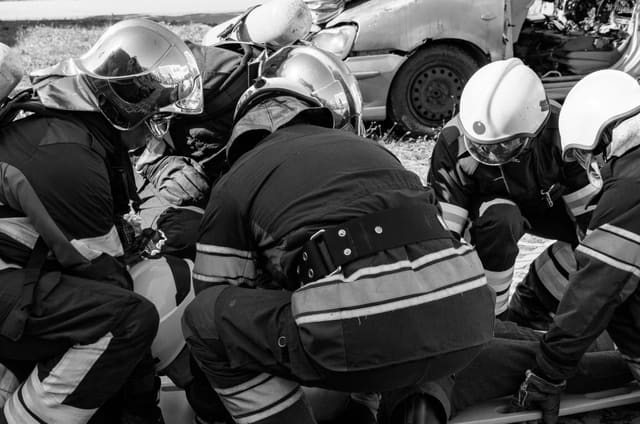
Keep multiple teams working from the same evolving incident picture.
Overview
Major incidents bring several teams to the same place at the same time, each with its own radios, procedures and command structure. Incident management software with shared mapping and interoperable push-to-talk gives every team one picture and one way to talk.
At a large fire, a multi-vehicle collision or a public event emergency, EMS, fire, police, traffic and private security often arrive on different communication systems. Commanders relay messages by phone or in person, resources are double-tasked and nobody has a complete view of who is where. Afterwards, reconstructing decisions is difficult. A shared incident platform creates a joint talk group across agencies, shows every unit on one map, tracks tasks and records the full timeline from the first call to stand-down.
A fire breaks out at a large shopping centre during a busy Saturday. The control room opens a major incident on the platform and creates a joint talk group linking fire crews, EMS, police, traffic officers and the centre's security team, including those on radio. All units appear on the shared map. The incident commander assigns triage, traffic diversion and evacuation tasks to specific teams, and each acknowledges on their device. The centre's security manager shares CCTV snapshots of exits. Every call, task and position is recorded for the post-incident debrief.
The challenge
Agencies cannot talk to each other directly.
Each team sees only its own units and information.
Without clear tasking, some jobs are done twice and others not at all.
Decisions and timings are difficult to reconstruct afterwards.
Operational flow
01
Open a major incident and set up command roles.
02
Create joint talk groups across push-to-talk and radio users.
03
Show all agencies' units, resources and hazards on one map.
04
Assign tasks to teams and track acknowledgement and completion.
05
Use the recorded timeline, communications and positions to review.
What operations can see
Operational impact
Who it's for
Coordinate EMS, fire and police with a shared picture.
Run multi-agency operations from one platform.
Bring private security into the public safety response.
Coordinate internal emergency teams with external responders.
Insight
A shared incident platform turns separate responses into one coordinated operation. Teams talk across systems, commanders see every resource, tasks are clear and the whole incident is recorded. Debriefs are based on evidence, and lessons are carried into the next response.
This use case is particularly relevant to Emergency response environments, but the underlying operating model can also apply wherever distributed frontline teams, vehicles, assets or facilities need stronger visibility and accountability.
FAQ
Incident management software helps control rooms and commanders manage incidents from call to close, with mapping, resource tracking, tasking, communication and records in one place.
Yes. Interoperable push-to-talk can link radio and phone users from different agencies into joint talk groups for the incident.
Every unit and resource is visible to commanders, which prevents duplication, shows gaps and speeds up decisions.
Yes. Communications, tasks and positions are time-stamped and stored, which supports debriefs and investigations.

Tell us how your operation runs today and we'll show you what this looks like for your teams.